← Back to Work
ZERO ATTRITION
I joined Mozilla in late 2020 to lead UX, design, and research for Hubs — Mozilla's social virtual reality platform. The organization was fully remote, the team had navigated significant leadership transitions, and morale was fragile.
Mozilla is not a typical tech company. The people there care deeply about the mission — which makes leadership in moments of uncertainty both more meaningful and more demanding.
The design team needed to feel like a design team again. That meant rebuilding trust, establishing clarity, and creating conditions for great work — while delivering a complete product redesign on a real timeline.
I started with one-on-ones. I listened more than I talked. I learned what each person needed to succeed — not what I assumed based on the role, but what they actually needed. Inclusive leadership isn't a policy. It's a practice that happens in individual conversations.
Then I rebuilt the operating model: structured cadences, design sprints, leaner reviews, and clearer individual ownership. I gave people autonomy and backed them — publicly, consistently, in rooms where it mattered.
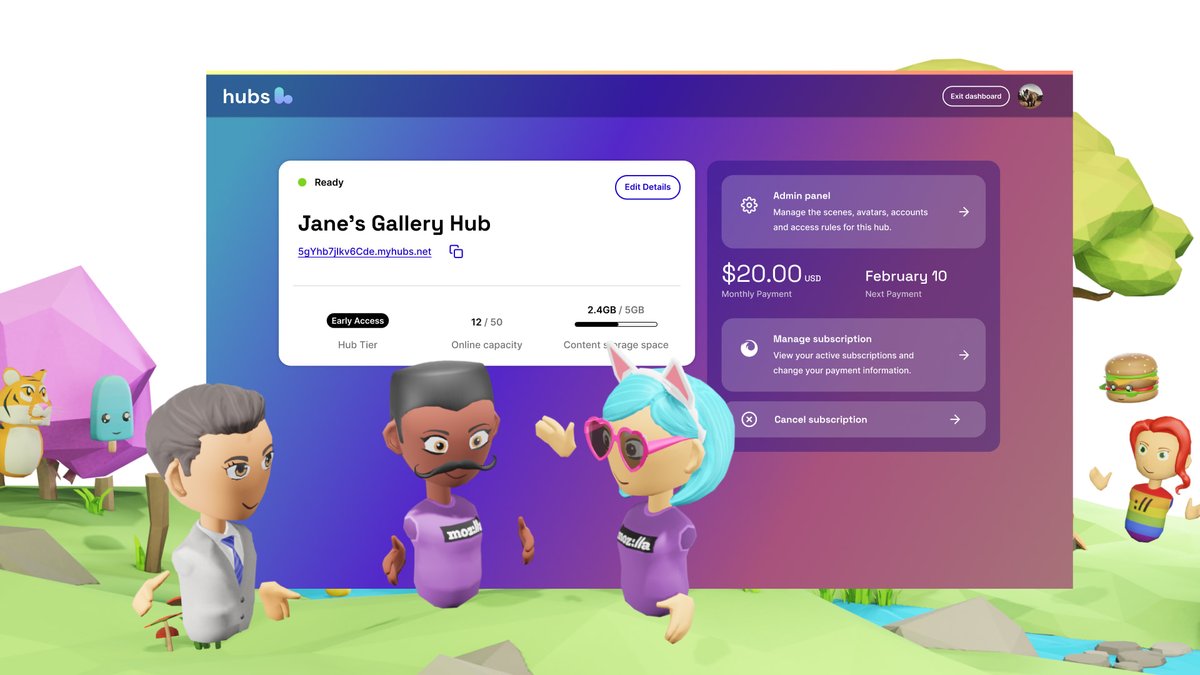
On the product side, I directed the full redesign of Hubs — coordinating designers, researchers, and 3D artists to deliver a more structured, intuitive experience grounded in actual user research.
Culture and delivery aren't in tension. When people feel supported and clear, they ship faster and better. Design management is fundamentally about creating trust — with the team, with partners, and with the people using what you build.
100% team retention over three years. In an org navigating real uncertainty, every person on my team was still there when I moved on. That doesn't happen by accident — it happens when people feel seen, supported, and clear about what they're building toward.
Delivery efficiency improved by 10%. The Hubs redesign shipped. And people wanted to stay and do the work. That's the outcome I'm most proud of.